

Learning
Pocket and Feel
Groove is more than keeping time. Feel comes from subdivision, touch, dynamics, phrasing, and the movement created between the notes.
Groove Is More Than Timing
Good timing alone does not automatically create groove.
Two drummers can play the same beat at the same tempo with similar accuracy, yet one groove may feel flat while the other feels alive, deep, and musical.
Groove is shaped by:
- Subdivision
- Dynamics
- Touch
- Phrasing
- Note placement
- Relaxation and motion
The feeling between the notes often matters more than the notes themselves.
Subdivision Shapes Feel
Subdivision is one of the biggest factors in groove feel.
Even when the meter remains steady, changing the subdivision underneath can completely change the emotional movement of the groove.
Straight eighth notes tend to feel direct and even. Triplet-based subdivision often feels larger, rounder, and more flowing.
Many drummers with powerful groove naturally blend subdivisions together rather than staying mechanically rigid.
Triplets Inside 4/4
One of the most powerful ways to shape feel is by using triplet phrasing inside a steady 4/4 groove.
The meter itself does not change. What changes is the motion inside the pulse.
Triplet movement can create:
- A rolling feel
- More musical motion
- A larger groove sensation
- A looser and more natural pulse
- Forward momentum without rushing
This type of phrasing appears constantly in funk, blues, jazz, classic rock, shuffle grooves, and many groove-oriented drummers.
Even subtle triplet influence can dramatically change how a groove feels emotionally.
Ghost Notes and Movement
Ghost notes are often what connect a groove together.
They create movement between accents and help the groove breathe naturally.
Strong ghost-note playing is usually:
- Controlled
- Relaxed
- Consistent
- Dynamic
- Connected to the pulse
Ghost notes should support the groove rather than distract from it.
Bass Drum Touch and Dynamics
Bass drum dynamics are a major part of groove feel.
Many drummers focus only on loud bass drum notes, but subtle bass drum touches often create the movement and elasticity inside the groove.
Softer bass drum notes can:
- Create forward motion
- Add weight without clutter
- Connect subdivisions together
- Make grooves feel larger and deeper
The foot should not only strike the drum. It should shape the groove dynamically.
Leading With Different Hands
Rudiments and sticking patterns can feel completely different depending on which hand begins the phrase.
For example:
- RR LL
- LL RR
may technically contain the same notes, but they often create different phrasing, accents, and emotional movement.
Groove is directional. The way a phrase begins affects how the listener experiences momentum and release.
This is one reason why two drummers playing the same sticking can still sound completely different.
Rudiments as Motion
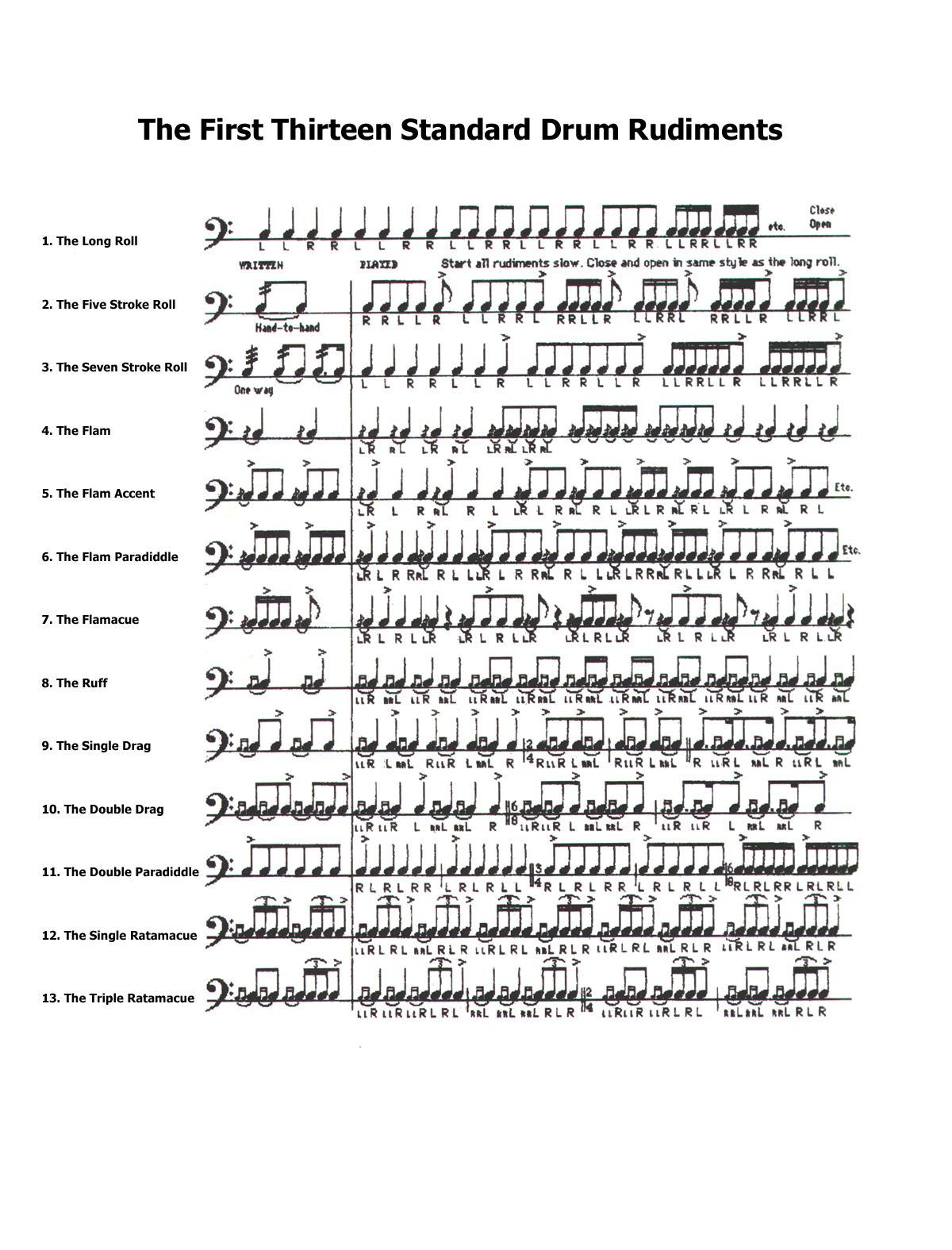
Rudiments are not only exercises. They are movement vocabulary.
View The First Thirteen Standard Drum Rudiments
View The Second Thirteen Standard Drum Rudiments
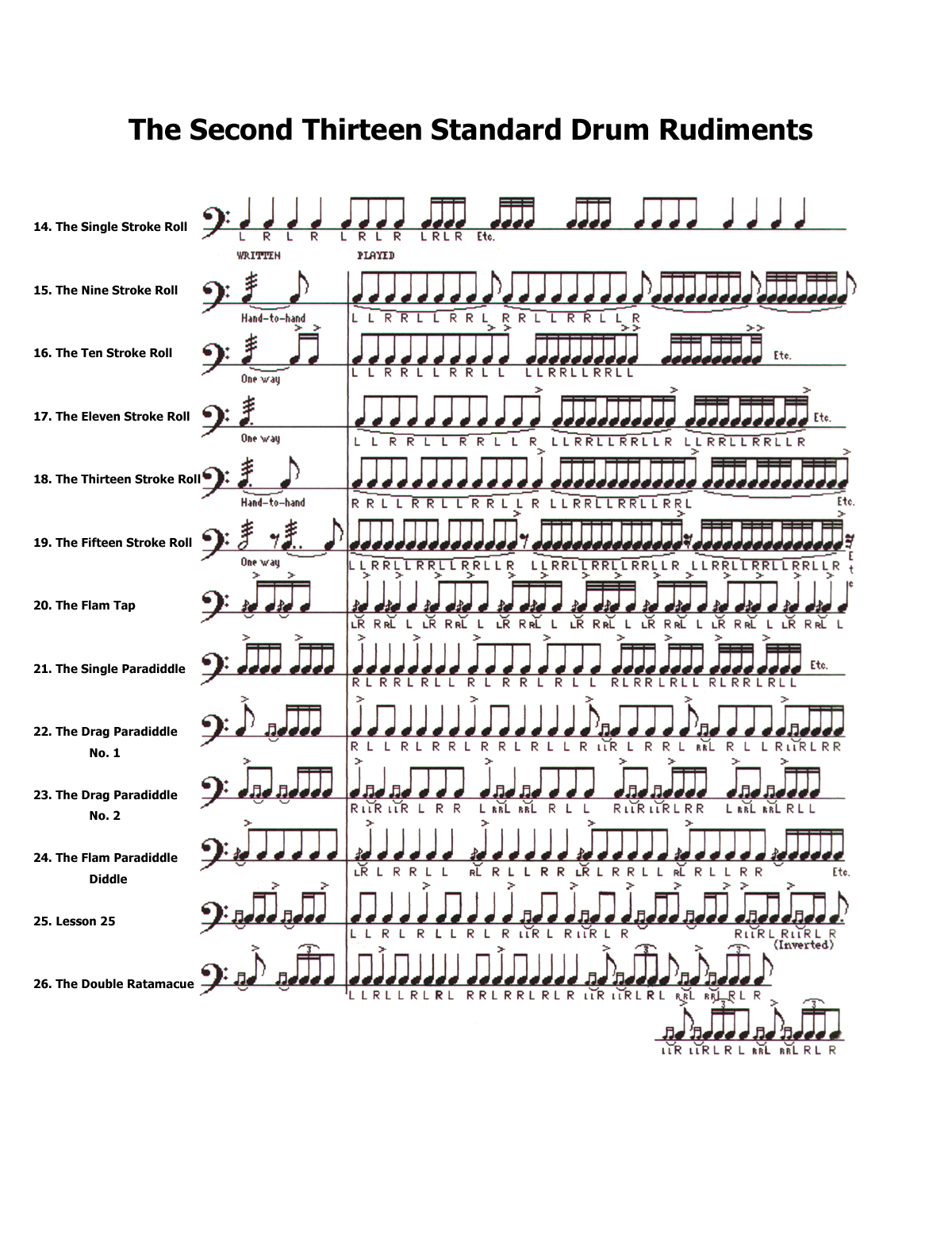
Singles, doubles, paradiddles, flams, drags, and rolls all create different types of flow and phrasing.
A paradiddle may create natural lead-hand movement. Flams add weight and emphasis. Drags and ruffs add elasticity and texture.
When used musically, rudiments become part of groove and phrasing rather than isolated technical drills.
Feel Cannot Be Fully Quantized
Groove is not purely mathematical.
Perfect grid alignment does not automatically create feel. In many cases, slight movement around the pulse helps grooves feel more human and musical.
Some drummers naturally play slightly behind the beat. Others push forward slightly. Some combine both depending on the section and emotional energy of the music.
Great groove often comes from controlled movement inside the pulse rather than robotic precision.
Final Thought
Pocket and feel are difficult to fully explain because they involve motion, touch, phrasing, timing, and emotional energy working together at the same time.
Groove is not only heard. It is physically felt.
The space between the notes shapes the music.